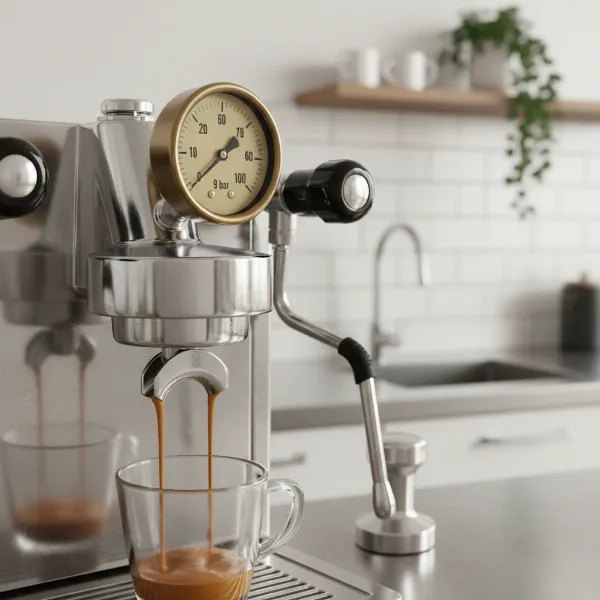
Imagine waking up to the aroma of freshly brewed coffee, then crafting a velvety latte or a perfectly layered macchiato right in your kitchen. For coffee enthusiasts, owning a machine capable of producing café-quality milk-based drinks is a game-changer. It’s not just about making coffee; it’s about transforming your morning ritual into an art form. This comprehensive guide will help you navigate the world of coffee makers designed to deliver those exquisite lattes and macchiatos, ensuring every cup is a masterpiece tailored to your taste.
Understanding Coffee Makers for Lattes and Macchiatos
At the heart of any great latte or macchiato lies a perfectly pulled espresso shot and expertly frothed milk. A coffee maker suitable for these beverages must excel in both areas. Historically, espresso machines were large, complex devices found only in cafes, requiring significant skill. However, advancements have brought sophisticated technology into home kitchens, making it easier than ever to achieve professional results.
The key distinction for latte and macchiato makers is their ability to generate high-pressure espresso and, crucially, to steam and froth milk. Standard drip coffee makers, while great for a simple black coffee, cannot produce the concentrated espresso shot needed as the base for these milk drinks. Therefore, when we talk about “coffee makers” for lattes and macchiatos, we are primarily referring to various types of espresso machines equipped with milk frothing capabilities.
Types of Coffee Makers for Lattes and Macchiatos
The market offers a range of machines, each providing a different balance of automation, control, and convenience. Understanding these types is the first step toward finding your ideal home barista setup.
Semi-Automatic Espresso Machines
Semi-automatic espresso machines offer a hands-on experience, providing users with significant control over the brewing process. Typically, you grind your beans, tamp the coffee into a portafilter, and control the espresso extraction time. These machines almost always feature a manual steam wand for frothing milk, allowing for precise control over milk texture, essential for creating microfoam for latte art.
- Pros:
- Superior control over espresso extraction and milk frothing.
- Allows for development of barista skills and latte art.
- Often produce excellent quality espresso.
- Can be a more affordable entry point into high-quality espresso compared to fully automatics.
- Cons:
- Requires a learning curve for both espresso pulling and milk frothing.
- More manual steps, potentially taking longer to prepare a drink.
- Often requires a separate grinder purchase.
- Usage and Maintenance: Preparation involves grinding fresh beans, dosing, tamping, and attaching the portafilter. For milk, you’ll use a stainless steel milk pitcher with the steam wand, ‘stretching’ and ‘texturing’ the milk to achieve the desired microfoam. Regular cleaning of the steam wand and portafilter is crucial to maintain hygiene and performance.
|
Our Picks for the Best Coffee maker in 2026
As an Amazon Associate I earn from qualifying purchases.
|
||
| Num | Product | Action |
|---|---|---|
| 1 | Amazon Basics 5 Cup Drip Coffee Maker with Glass Coffee Pot (0.8 Qt), Auto Shut-off, Auto Pause, Removable Filter Basket, Matte Black |

|
| 2 | BLACK+DECKER 12-Cup Digital Coffee Maker, Programmable, Washable Basket Filter, Sneak-A-Cup, Auto Brew, Water Window, Keep Hot Plate, Black |
|
| 3 | Cuisinart 14-Cup Coffee Maker, Programmable PerfecTemp Glass Carafe Coffee Machine with 1-4 Cup Setting, Brew Strength Control and Pause, Stainless Steel, DCC-3200NAS |
|
| 4 | Elite Gourmet EHC4128 Automatic 4-Cup Brew & Drip Coffee Maker with Pause N Serve, Glass Carafe, Reusable Filter, On/Off Switch, Keep Warm, Water Level Indicator, Black |
|
| 5 | Mr. Coffee® 5-Cup Mini Brew Switch Coffee Maker, Black |
|
| 6 | Cuisinart 12 Cup Brew Central Maker Coffee Maker, Black Stainless Steel, DCC-1200BKSNAS |
|
| 7 | Hamilton Beach 2-Way Programmable Coffee Maker, 12 Cup Glass Carafe And Single Serve Coffee Maker, Black with Stainless Steel Accents, 49980RG |
|
| 8 | Mr. Coffee Black Coffee Maker, 12 Cups, with Auto Pause and Glass Carafe, Perfect for Home and Office Use |
|
| 9 | Keurig K-Mini Single Serve K-Cup Pod Coffee Maker, 6 to 12oz Brew size, with Cord Storage, Perfect for Small Spaces, Black |
|
| 10 | Ninja 12-Cup Programmable Coffee Brewer, 2 Brew Styles, Adjustable Warm Plate, 60oz Water Reservoir, Delay Brew - Black/Stainless Steel |
|
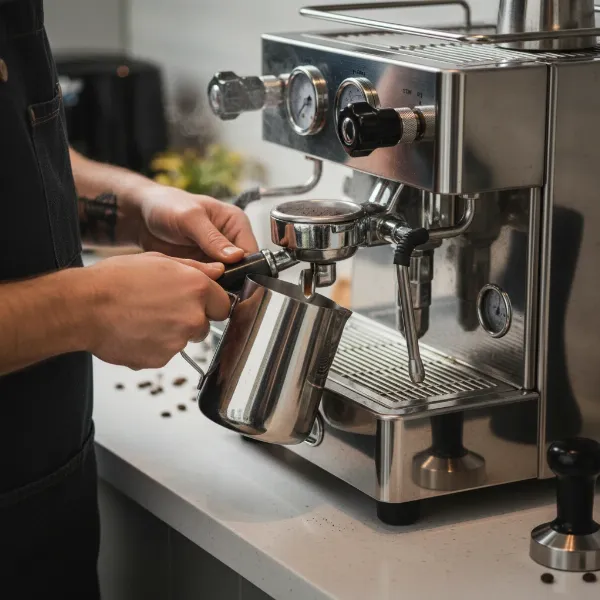 Barista preparing a latte with a semi-automatic espresso machine, demonstrating manual control and skill.
Fully Automatic (Bean-to-Cup) Espresso Machines
Fully automatic machines, often called “bean-to-cup,” streamline the entire coffee-making process. From grinding fresh beans to brewing espresso and frothing milk, these machines handle almost everything at the touch of a button. They are designed for convenience, making them ideal for those who want café-quality drinks with minimal effort.
- Pros:
- Exceptional convenience with one-touch operation for various drinks.
- Consistent results without requiring barista skills.
- Often include built-in grinders and automated milk systems.
- Many models feature self-cleaning functions for milk systems.
- Cons:
- Higher initial cost compared to semi-automatic models.
- Less control over specific aspects of brewing and frothing.
- Can be larger, requiring more counter space.
- Usage and Maintenance: Simply fill the bean hopper and water tank, and, for milk drinks, the integrated milk carafe. The machine handles the rest. Maintenance usually involves regular emptying of the dreg box and drip tray, descaling, and cleaning the milk system, often guided by automated prompts.
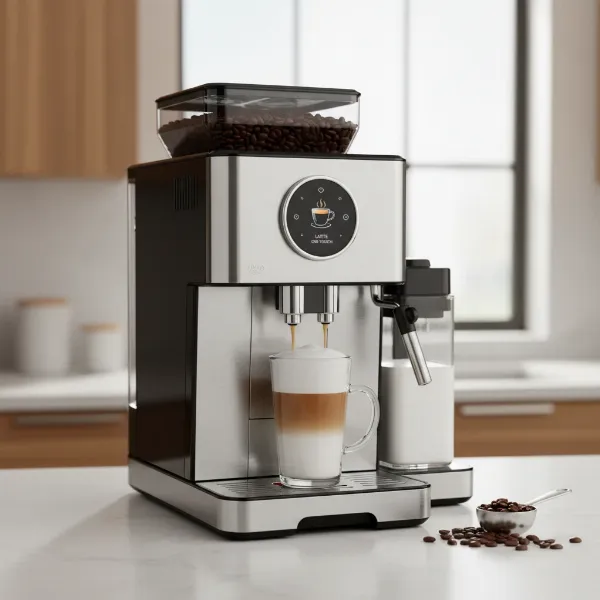 Modern fully automatic espresso machine in a kitchen making a latte with one-touch convenience.
Capsule/Pod Coffee Makers
Capsule or pod coffee makers, such as certain Nespresso models, offer unparalleled simplicity and speed. While they don’t brew traditional espresso (often producing an espresso-style concentrated coffee), many come with integrated milk frothers or separate Aeroccino-style devices to create frothed milk for lattes and macchiatos.
- Pros:
- Extremely easy and fast to use.
- Consistent results with pre-portioned pods.
- Compact designs, saving counter space.
- Variety of coffee flavors available in pod form.
- Cons:
- Coffee quality is generally considered inferior to freshly ground beans.
- Higher ongoing cost due to proprietary pods.
- Limited customization options.
- Not true high-pressure espresso.
- Usage and Maintenance: Insert a capsule, press a button for coffee, and use the integrated frother or separate device for milk. Cleaning is typically straightforward, focusing on rinsing the milk frother components.
Key Features for Lattes and Macchiatos
Beyond the basic type, several features are paramount when selecting a coffee maker specifically for lattes and macchiatos.
Espresso Quality (Pump Pressure, Temperature Control)
For genuine espresso, a machine needs to exert sufficient pressure—ideally around 9 bars—to extract the full flavor and create the rich, reddish-brown crema. Look for machines that clearly state they use a pump to push steam (not just hot water) through the coffee grounds. Advanced models may feature PID (Proportional-Integral-Derivative) temperature control, which ensures water is heated to the optimal and consistent temperature for extraction, yielding a more balanced and flavorful espresso shot.
Milk Frothing System
This is arguably the most crucial feature for lattes and macchiatos.
- Manual Steam Wand: Found on semi-automatic machines, these give you complete command over the frothing process. With practice, you can achieve silky microfoam perfect for latte art.
- Automatic Frother/Integrated Milk System: Common in fully automatic machines, these systems automatically heat and froth milk, often directly into your cup. Examples include De’Longhi’s LatteCrema Hot technology or Philips’ LatteGo system. They offer convenience but less fine-tuning of texture. Some advanced machines offer hybrid options, providing both automated and manual frothing capabilities.
- Removable Milk Container/Carafe: For automated systems, a removable container that can be stored in the fridge is highly convenient, and dishwasher-safe components simplify cleaning.
Built-in Grinder
A built-in grinder ensures your coffee is always made with freshly ground beans, which is fundamental for optimal flavor in espresso. Fully automatic machines often include this feature, offering various grind settings to fine-tune your espresso. If opting for a semi-automatic without one, a quality external grinder is a necessary investment.
Water Reservoir and Bean Hopper Capacity
Consider how many drinks you’ll make daily. Larger water reservoirs (e.g., 60-74 ounces) mean less frequent refilling, while smaller ones ensure you always use fresh water. For machines with built-in grinders, a decent-sized bean hopper (½ to 1 pound capacity) is practical, but ensure it’s well-sealed to preserve bean freshness.
Ease of Cleaning and Maintenance
Milk systems, especially, require regular cleaning to prevent bacteria buildup and maintain performance. Look for machines with easy-to-disassemble milk components, automated rinse cycles, or dishwasher-safe parts. Descaling programs are also important for prolonging the machine’s lifespan.
Customization Options
The ability to customize your drink is key to perfecting your latte or macchiato. This includes adjustable grind settings, programmable shot volumes, milk temperature, froth density, and even options for different milk types (dairy vs. plant-based). Some machines allow for multiple user profiles to save individual preferences.
Top Brands and Models for Lattes and Macchiatos
Many reputable brands offer excellent machines tailored for milk-based coffee drinks. Here are a few standout examples:
- Breville: Known for user-friendly interfaces and robust performance. The Breville Barista Touch Impress offers a touchscreen experience with guided brewing and impressive automatic milk frothing, making it a favorite for overall performance. For a more compact and value-driven semi-automatic, the Breville Bambino Plus is praised for its fast heat-up and excellent steam wand, producing silky microfoam quickly.
- De’Longhi: Offers a wide range of fully automatic machines, often featuring their LatteCrema Hot or LatteGo systems for effortless milk frothing. The De’Longhi Magnifica Start is an excellent choice for beginners, providing simple one-touch latte macchiatos with customizable grind and intensity. The De’Longhi Rivelia stands out for its versatility, offering two hoppers for switching between different bean types and multiple drink options.
- Jura: Renowned for high-end, fully automatic, bean-to-cup machines that emphasize quality and convenience. The Jura S8 is a premium option, celebrated for its wide array of drink options (including a unique sweet foam latte feature) and responsive touchscreen, delivering barista-quality beverages with minimal effort.
- KitchenAid: The KitchenAid KF8 Fully Automatic Espresso Machine offers extensive drink options and customization, including settings for both dairy and non-dairy milk, ensuring optimal frothing results. Its removable milk container and large water tank add to its convenience.
“The true magic of a perfect latte lies in the synergy between a rich espresso and finely textured milk. A great machine empowers you to achieve that balance consistently.”
Buying Guide: Choosing Your Perfect Latte and Macchiato Maker
Selecting the right machine requires considering your habits, preferences, and kitchen setup.
Assess Your Barista Skill Level & Desired Control
Are you eager to learn manual frothing and latte art, or do you prefer the convenience of one-touch beverages? Semi-automatic machines are for the aspiring barista, while fully automatic models suit those who prioritize speed and ease. If you’re completely new, a fully automatic machine designed for beginners can ease you into the world of specialty coffee.
Consider Your Budget
Espresso machines for lattes and macchiatos range widely in price. Pod machines are typically the least expensive entry point, followed by semi-automatics, with fully automatics often being the most significant investment. Balance your desired features with what you’re willing to spend, remembering that the long-term enjoyment and savings from not buying cafe drinks can offset the initial cost.
Evaluate Kitchen Space
Espresso machines, especially fully automatic ones with integrated grinders and milk systems, can take up considerable counter space. Measure your available area before committing to a machine to ensure it fits comfortably in your kitchen.
Read Reviews and Watch Demos
Utilize expert reviews and user testimonials to gauge a machine’s performance, reliability, and ease of use. Watching video demonstrations can also give you a clear idea of the daily operation and cleaning processes.
Prioritize Ease of Cleaning
A machine that is difficult to clean will quickly become a nuisance. Pay special attention to the milk system’s cleaning process. Automatic rinse cycles and dishwasher-safe components can save significant time and effort, ensuring hygiene and prolonging your machine’s life.
Tips for Making the Best Lattes and Macchiatos
Owning the right machine is half the battle; the other half is mastering the craft.
Use Quality Beans
Always start with high-quality, freshly roasted espresso beans. Grinding them just before brewing makes a significant difference in the flavor profile of your espresso. Experiment with different roasts and origins to find your preferred taste.
Master the Milk
- Always use cold milk: Cold milk provides more time to incorporate air and achieve the desired texture before it gets too hot.
- Choose the right milk: Whole dairy milk is ideal for producing creamy microfoam due to its fat and protein content. While low-fat and non-dairy options can froth, “barista blend” alternatives are often formulated to yield better results.
- Proper frothing technique (manual wands): Start by “stretching” the milk (incorporating air) just below the surface until it doubles in volume, then “texturing” (submerging the wand deeper) to swirl the air throughout the milk, creating a silky, glossy microfoam without large bubbles.
Regular Cleaning
Consistency is key, and that extends to cleaning. Regularly clean your machine’s components, especially the steam wand or milk system, to prevent blockages and maintain optimal performance and hygiene. Descale your machine according to the manufacturer’s recommendations.
Experiment with Settings
Don’t be afraid to adjust grind size, dose, water temperature, or milk settings. Small tweaks can dramatically alter the final taste and texture of your latte or macchiato. Embrace the learning process and discover what works best for your palate.
Conclusion
Creating perfect lattes and macchiatos at home is a rewarding experience that elevates your daily coffee routine. Whether you choose a hands-on semi-automatic to hone your barista skills or a convenient fully automatic machine for effortless luxury, the right coffee maker will transform your kitchen into a personal café. Focus on features that ensure quality espresso and superior milk frothing, and you’ll be well on your way to enjoying delicious, handcrafted beverages every day. What kind of perfect latte or macchiato will you create first?
Frequently Asked Questions
What’s the main difference between a latte and a macchiato?
A latte typically consists of one or two espresso shots topped with steamed milk and a thin layer of foam. A macchiato, meaning “marked” in Italian, is an espresso “marked” with a small amount of foamed milk, resulting in a stronger coffee flavor with just a hint of creamy texture.
Can I make latte art with any coffee machine?
Latte art requires finely textured milk, known as microfoam, which is best achieved with a manual steam wand on semi-automatic or some high-end fully automatic espresso machines. While automatic frothers can produce foam, they generally offer less control over the texture needed for intricate designs.
Is a built-in grinder essential for making good lattes?
While not strictly essential if you have a high-quality external grinder, a built-in grinder offers maximum convenience and ensures you’re always using freshly ground beans. Freshness is crucial for espresso quality, directly impacting the flavor of your latte or macchiato.
How often should I clean my coffee maker’s milk system?
The milk system should be cleaned after every use, especially the steam wand, to prevent milk residue buildup and bacteria growth. Many automatic machines have quick rinse cycles, and detachable components should be washed thoroughly with soap and water or in a dishwasher if specified.
What kind of coffee beans are best for lattes and macchiatos?
Medium to dark roast espresso beans are generally preferred for lattes and macchiatos. They offer a robust flavor profile that stands up well to milk. Freshly roasted and ground beans are always recommended for the best taste and crema.