Brewing the perfect cup of espresso is an art and a science, a delicate balance of grind size, temperature, time, and perhaps most critically, pressure. For decades, the figure “9 bars” has been the revered benchmark in the world of espresso, a mystical number whispered among baristas and printed on machine specifications. But why does this specific pressure matter so much for your daily shot? As an experienced technician with a deep understanding of coffee makers, I’m here to demystify the science behind 9 bars, explore its profound impact on flavor and quality, and look at how this standard is evolving in modern espresso machines. Understanding this fundamental principle is key to unlocking the full potential of your espresso machine and consistently crafting exceptional coffee.
An Overview of Espresso Machine Pressure
To appreciate the significance of 9 bars, it’s essential to first understand what pressure means in the context of espresso. A “bar” is a unit of pressure roughly equivalent to the atmospheric pressure at sea level, or about 14.5 pounds per square inch (psi). So, when an espresso machine operates at 9 bars, it’s exerting approximately 130 psi of force through a compact disc of finely ground coffee, known as the puck. This immense force is what transforms water and coffee grounds into that rich, concentrated shot we love, characterized by emulsified oils, suspended solids, and the coveted layer of crema.
The journey to the 9-bar standard is rooted in history. Early “steam” espresso machines, pre-mid-20th century, operated at a mere 1-2 bars of pressure, often producing hot, bitter coffee rather than true espresso. A pivotal innovation arrived in 1947 when Italian engineer Achille Gaggia patented a lever-operated machine. His design mechanically forced water through the coffee puck using a piston, effectively introducing the higher pressure required for modern espresso extraction and establishing the foundation for the 9-bar standard that endures today.
The Science Behind 9 Bars: Why It’s the Sweet Spot
The consistent adherence to 9 bars isn’t arbitrary; it’s the result of decades of engineering, physics, and taste refinement, making it the “gold standard” for espresso extraction. This pressure level creates a perfect environment for several critical aspects of espresso quality:
Ideal Flow Rate
|
Our Picks for the Best Coffee maker in 2026
As an Amazon Associate I earn from qualifying purchases.
|
||
| Num | Product | Action |
|---|---|---|
| 1 | Cuisinart 14-Cup Coffee Maker, Programmable PerfecTemp Glass Carafe Coffee Machine with 1-4 Cup Setting, Brew Strength Control and Pause, Stainless Steel, DCC-3200NAS |

|
| 2 | Cuisinart Coffee Maker, 14-Cup Glass Carafe, Fully Automatic for Brew Strength Control & 1-4 Cup Setting, Stainless Steel, DCC-3200UMB, Umber |
|
| 3 | BLACK+DECKER 12-Cup Digital Coffee Maker, Programmable, Washable Basket Filter, Sneak-A-Cup, Auto Brew, Water Window, Keep Hot Plate, Black |
|
| 4 | BLACK+DECKER 12-Cup Coffee Maker with Easy On/Off Switch, Easy Pour, Non-Drip Carafe with Removable Filter Basket, Vortex Technology, Black |
|
| 5 | BLACK+DECKER CM1160W-1 CM1160W 12-Cup Programmable Coffeemaker, White/Stainless Steel |
|
| 6 | Cuisinart Coffee Maker, 14-Cup Glass Carafe, Fully Automatic for Brew Strength Control & 1-4 Cup Setting, Stainless Steel, DCC-3200CRM, Cream. |
|
| 7 | Cuisinart 14-Cup Coffee Maker, Programmable PerfecTemp Glass Carafe Coffee Machine with 1-4 Cup Setting, Brew Strength Control and Brew Pause, Stainless Steel, DCC-3200WNAS, White |
|
| 8 | Cuisinart 14-Cup Coffee Maker, Programmable PerfecTemp Glass Carafe Coffee Machine with 1-4 Cup Setting, Brew Strength Control and Pause, Stainless Steel, DCC-3200BKSNAS, Black |
|
| 9 | Ninja 12-Cup Programmable Coffee Brewer, 2 Brew Styles, Adjustable Warm Plate, 60oz Water Reservoir, Delay Brew - Black/Stainless Steel |
|
| 10 |
|
|
At approximately 9 bars, properly ground and tamped coffee allows water to flow through the puck at an optimal rate, resulting in the desired 25-30 second extraction window for a balanced espresso. Lower pressure can lead to slower, under-extracted, and sour shots, while excessively high pressure can cause channeling and bitterness as water forces its way through too quickly.
Even Extraction
Pressure is crucial for ensuring uniform water penetration through the coffee puck. If the pressure is too low, water tends to seek the path of least resistance, bypassing certain areas of the coffee grounds and leading to uneven extraction. Conversely, if the pressure is too high, it can cause the puck to collapse, also resulting in an inconsistent flow and extraction.
Optimal Crema and Mouthfeel
One of the most defining characteristics of espresso is its rich, velvety crema. Nine bars of pressure efficiently emulsifies the coffee oils, producing the ideal creamy texture and golden foam. Too much pressure can break this delicate emulsion and release harsh compounds, while insufficient pressure may yield a thin, underdeveloped crema.
Machine Longevity
Espresso machines are meticulously engineered around the 9-bar standard. Components like pumps, valves, and gaskets are designed to operate most efficiently and reliably at this pressure. Consistently running a machine at significantly higher pressures can lead to premature wear and potential component failure.
Understanding Pressure’s Impact on Flavor and Extraction
Pressure acts as a force multiplier in the extraction process, directly influencing how deeply water interacts with the coffee grounds and, consequently, the final flavor profile. Manipulating pressure can unveil different characteristics of the bean:
- 6-7 bars: Often results in a brighter, more tea-like acidity with a lighter body and thinner crema. This range can highlight delicate floral or fruity notes.
- 8-9 bars: This is the classic sweet spot, producing balanced sweetness, a creamy texture, and the iconic golden crema. It’s the benchmark for a well-rounded espresso.
- 10+ bars: Can lead to over-extraction, producing bitter, woody flavors with a dark, harsh finish. This is generally avoided for quality espresso.
The optimal pressure can also vary based on the coffee roast. Lighter roasts, being denser and less soluble, may benefit from slightly higher pressures to aid in solubility. Darker roasts, which are generally more soluble, often taste best when extracted at slightly lower pressures, typically around 7-8 bars, to avoid bitterness.
Beyond the Fixed 9 Bars: Pressure Profiling and Modern Trends
While 9 bars remains the standard, advanced baristas and increasingly, home users, are exploring techniques that move beyond a fixed pressure throughout the entire shot. This is where pressure profiling comes in, allowing for greater control over extraction.
Pressure profiling involves manually or electronically varying the pressure during the shot to enhance flavor and mouthfeel. Instead of instantly hitting the coffee puck with full 9 bars, the pressure is gradually increased and decreased throughout the extraction process. This technique often mimics the natural declining pressure curve of traditional lever machines, allowing baristas to emphasize sweetness, body, or acidity.
A typical pressure profile might include:
| Phase | Time | Pressure | Purpose |
|---|---|---|---|
| Pre-infusion | 0–8 sec | 2–4 bars | Gently saturate puck for even extraction |
| Ramp-up | 8–12 sec | 6–9 bars | Build extraction force |
| Decline | 20–30 sec | 7–8 bars | Balance acidity, limit bitterness |
There are also specific scenarios where intentionally breaking the 9-bar rule can unlock unique flavors:
- Lighter Roasts: Using 7-8 bars with a longer pre-infusion can extract more evenly without excessive acidity, allowing delicate flavors to shine.
- Dark Roasts: These fragile beans can become bitter at higher pressures. Dropping to 6-7 bars with shorter extraction times can emphasize chocolate and caramel notes.
- Specialty Techniques: Methods like “blooming espresso” (pre-infusing at 2 bars, pausing, then resuming full pressure) or “turbo shots” (using 6 bars for a faster, filter-like clarity) showcase the versatility of pressure manipulation.
> “While 9 bars is the established standard, the true mastery of espresso lies in understanding why it’s the standard, and then knowing when and how to intelligently deviate from it to achieve a specific flavor profile.” – ReviewFav.com Admin, Espresso Machine Technician
Looking ahead to 2026 and beyond, espresso technology continues to evolve. We can anticipate even smarter and more customizable pressure control systems, including PID-linked pressure profiling, AI-assisted extraction curves, and a growing interest in low-pressure espresso movements that prioritize clarity over intense crema. The future suggests that 9 bars will remain an important baseline, but increasingly, it will be seen as a starting point rather than an unbendable rule.
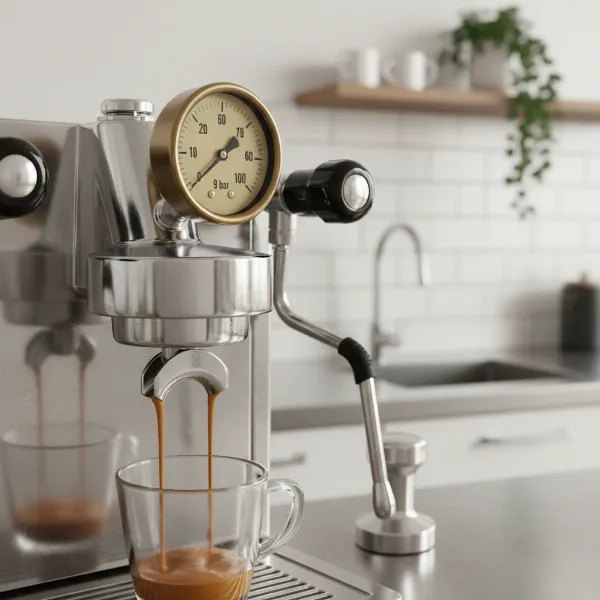 An espresso machine with a visible pressure gauge showing 9 bars, indicating optimal extraction pressure.
Pressure vs. Flow: A Crucial Relationship
While pressure often gets the spotlight, flow rate—the amount of water passing through the coffee puck per second—is equally important. High pressure without adequate flow can compress the puck without improving extraction, leading to undesirable results. Modern machines with flow control features allow baristas to manipulate both variables, offering ultra-fine control over the extraction process.
Consider these scenarios:
| Scenario | Pressure | Flow | Result |
|---|---|---|---|
| High pressure + low flow | 9–10 bars | 1.0 ml/s | Bitter, over-extracted |
| Moderate pressure + balanced flow | 8–9 bars | 1.5 ml/s | Ideal balance |
| Low pressure + high flow | 6 bars | 2.0 ml/s | Sour, under-extracted |
Achieving stable pressure with a predictable flow rate is paramount for repeatable, high-quality espresso.
Common Misconceptions and Troubleshooting
Many entry-level espresso machines boast “15-bar” or even “20-bar” pumps, leading to a common misconception that higher numbers equate to better espresso. In reality, these machines use pumps capable of generating high pressure, but they are internally regulated down to approximately 9 bars at the brew head, which is where the extraction truly happens. Brewing above 10 bars often leads to over-extraction, collapsed coffee pucks, and unnecessary strain on the machine’s pump. The real differentiator in machine quality is pressure stability, not peak pump capability.
If your espresso isn’t tasting quite right, it might be due to pressure-related issues, although grind size and temperature are often bigger culprits. Here are some common problems:
- Thin, sour espresso: Often indicates too low pressure or a grind that is too coarse. Verify your machine is hitting 9 bars.
- Bitter espresso: Can result from excess pressure or over-extraction. Consider reducing pressure slightly (if adjustable) or shortening the shot.
- Channeling or spurting: Usually caused by uneven puck preparation. Use a WDT (Weiss Distribution Technique) tool, level tamp, and consider pre-infusion to improve puck integrity.
- No crema: Typically points to low pressure or stale coffee beans. Always use fresh beans and check your pump pressure if issues persist.
Choosing and Maintaining Your Espresso Machine’s Pressure System
Understanding the type of pump in your espresso machine can also give you insight into its pressure capabilities and consistency.
- Vibratory Pumps: Commonly found in compact home machines, these pumps can produce around 15 bars max but are regulated down to 9 bars. They are inexpensive and reliable but can be less stable during extraction.
- Rotary Pumps: Featured in prosumer models, these pumps provide precise, consistent pressure and quieter operation. They are ideal for pressure profiling and can often be plumbed directly into a water line.
- Manual or Lever Systems: These create natural pressure curves that taper off as the spring relaxes, offering a hands-on method to experiment with pressure variations.
If you suspect your machine’s pressure is off and you’ve ruled out grind and temperature, a small adjustment might be necessary. You can measure actual brew pressure using a portafilter pressure gauge or by running a shot with a blind basket and observing your machine’s manometer. Most machines have an Over-Pressure Valve (OPV) that can be adjusted in small increments (quarter-turns) to increase or decrease brew pressure. However, it’s crucial to consult your machine’s manual or a qualified technician, especially for machines under warranty, before making any internal adjustments. Regular cleaning of your machine, using filtered water, and proper storage are also vital for overall machine health, which indirectly supports optimal pressure system function.
Conclusion
The 9-bar pressure standard for espresso is a cornerstone of consistently excellent coffee, born from decades of Italian ingenuity and scientific refinement. It facilitates the ideal flow rate, ensures even extraction, and produces the desirable crema and mouthfeel that define a true espresso. While it serves as a critical benchmark, the evolving landscape of espresso technology in 2026 increasingly encourages enthusiasts to explore beyond this fixed point. Techniques like pressure profiling offer a nuanced control, allowing for customized extractions that can highlight specific characteristics of different roasts. Understanding both the foundational importance of 9 bars and the flexibility offered by modern innovations empowers you to elevate your home barista skills. Are you ready to dive deeper into controlling the pressure and unlocking new flavors in your next cup?
Frequently Asked Questions
Why do some espresso machines advertise 15 or 20 bars of pressure if 9 bars is ideal?
Many entry-level espresso machines advertise higher bar ratings (e.g., 15 or 20 bars) because that’s the maximum pressure their vibratory pumps can generate. However, this pressure is typically regulated down to the optimal 9 bars at the grouphead during extraction. The higher number indicates pump capability, not the actual pressure applied to the coffee, which is crucial for a balanced shot.
Can I adjust the pressure on my home espresso machine?
Some higher-end prosumer and commercial machines offer adjustable pressure, often through an Over-Pressure Valve (OPV) or advanced pressure profiling systems. Many standard home machines have a fixed pressure setting that is not easily user-adjustable. Always consult your machine’s manual and consider a pressure gauge before attempting any adjustments.
How does pressure impact the crema on my espresso?
Pressure is vital for crema formation. Optimal pressure (around 9 bars) efficiently emulsifies the coffee oils and suspended solids, creating the rich, golden-brown foam known as crema. Too little pressure results in thin or absent crema, while excessive pressure can break the emulsion, leading to a dark, harsh, and less desirable crema.
What is pre-infusion, and how does it relate to pressure?
Pre-infusion is a technique where a small amount of water is introduced to the coffee puck at low pressure (typically 2-4 bars) before the full brewing pressure is applied. This gentle saturation helps to evenly wet the coffee grounds, reducing the risk of channeling and promoting a more uniform extraction, ultimately leading to a more balanced and flavorful espresso.